13Nov
Art and Computers - an emerging history
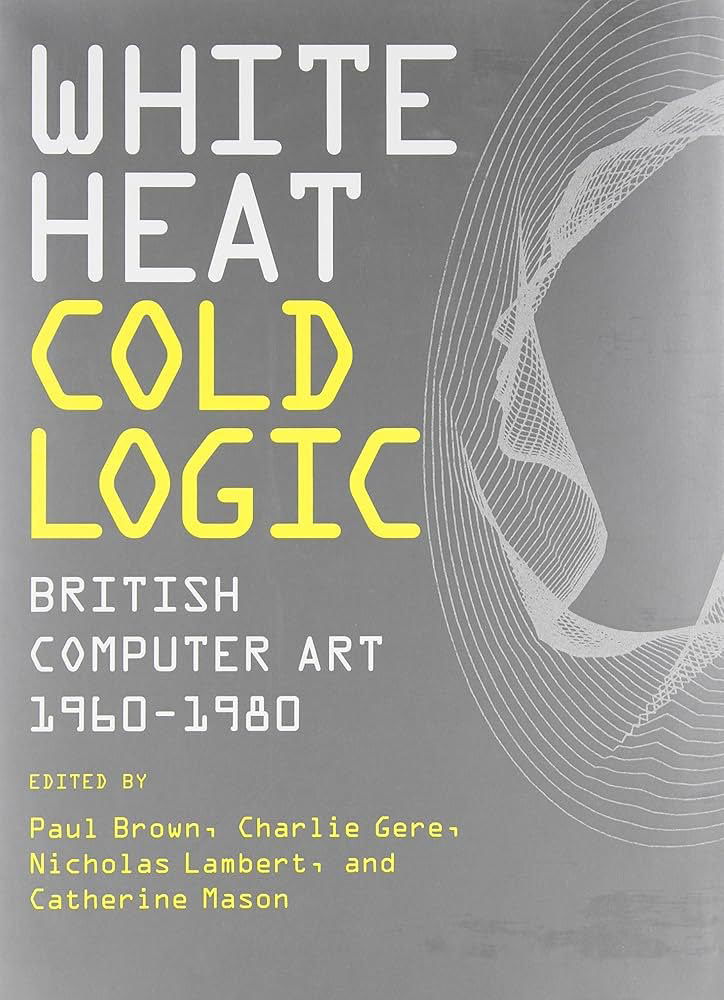
Paul Brown worked with Chris Briscoe at the Slade School of Fine Art in the 1970s-1980s
Interestingly, White Heat, Cold Logic points-up the importance of the arts in the evolution of computers in the arts-media-design-communications spectrum. Artists treat of new technology in a more exploratory way than computer-scientists do. As an example of this consider the development of Aaron - the computer-artist-machine made by the artist Harold Cohen in the early 1970s.
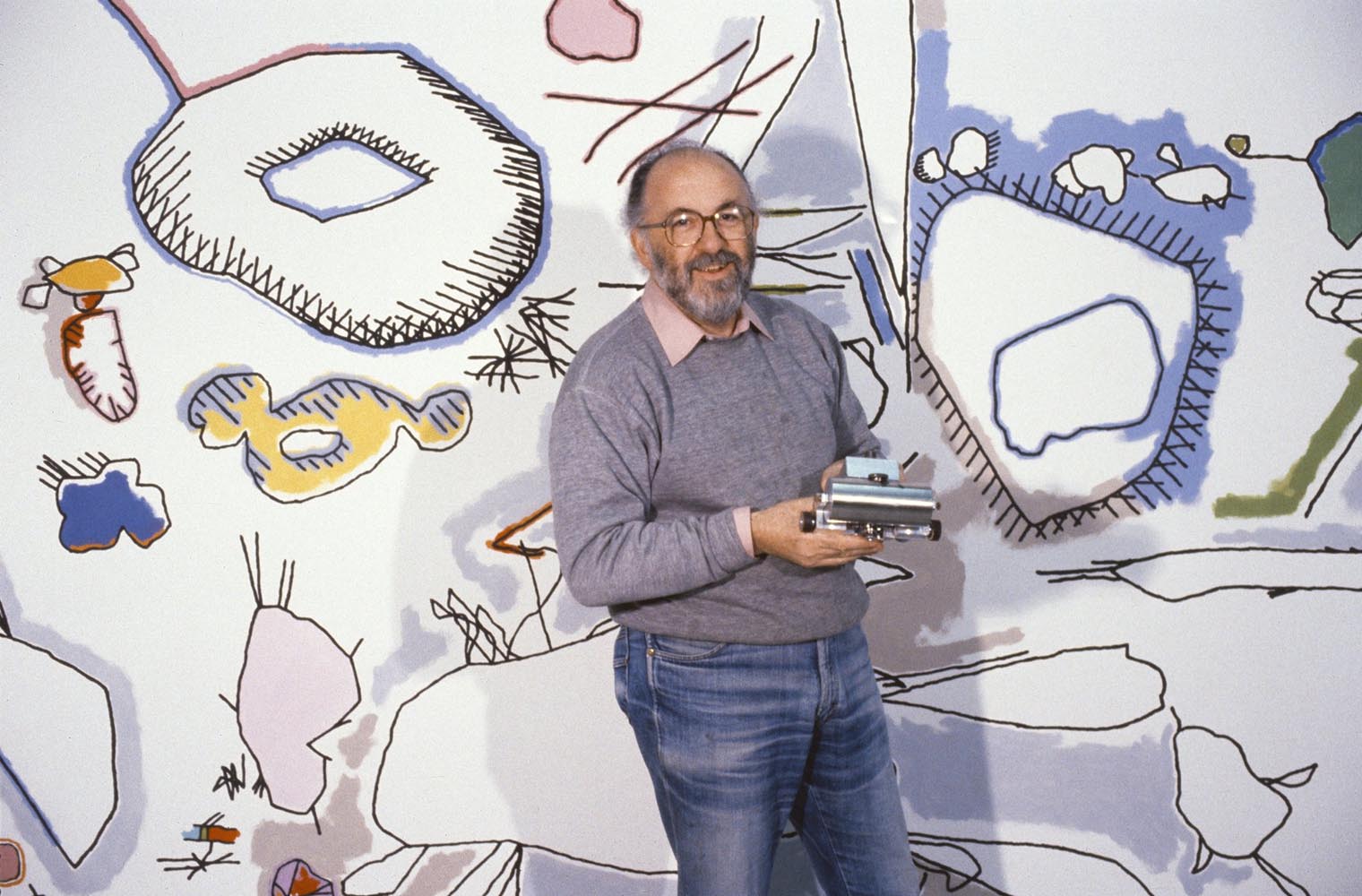
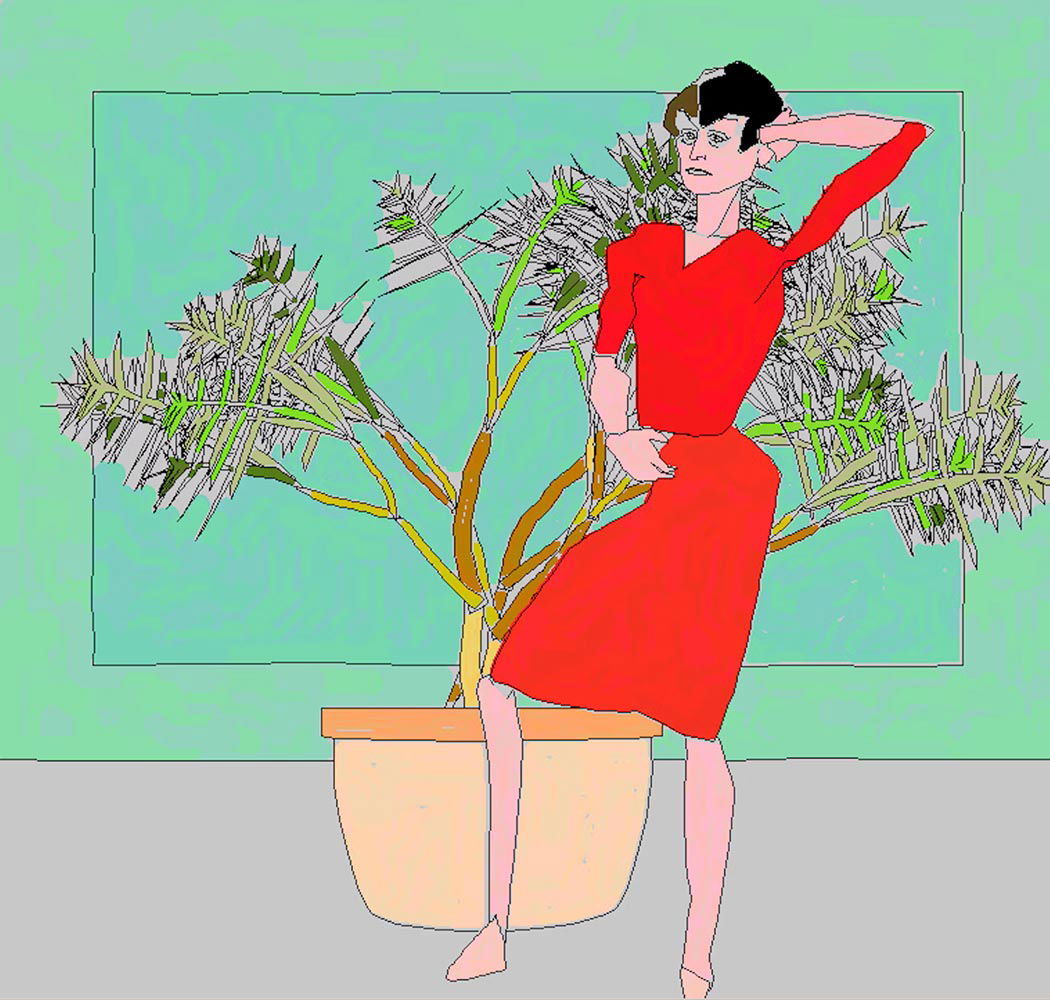
“Harold Cohen was an artist who created AARON, an early artificial intelligence (AI) program designed to autonomously produce paintings and drawings. Cohen programmed AARON with a set of rules for creating art, viewing the project as a collaboration that allowed him to explore the process of perception and creativity through a computer program. AARON is considered a pioneering example of digital art.” (Google AI synopsis)
the first AI - art a 2001 painting by Cohen's Aaron.
The fact that now in the 2020s new media content - what Roy Ascott calls Creative Cybernetics - the language of the marriage of computing, art-design, hypertext and communications is still being forged in this spectrum - now spreading ever-wider with Chat GPT, Open AI, Social Media content-creation, hacking, Influencing, blogging, game-design, short-form video etc etc...
The exploration of the use of computers in art is useful for young creatives because it illustrates how people - not necessarily programmers - got started in computer-graphics, animation, blogging, AI, game-design, content-creation and related areas...
We were all young once, and many of us, including me, at age 17, didn't have any idea exactly where we were going. All I knew was that I could draw, and that I liked Libraries and 2nd-hand bookshops, and mooching around art galleries -not that there were any on the Isle of Wight in the 1950s...
But I won a few art prizes at Junior School, had a sympatico Liverpudlian head-mistress (Mrs Winifred Foy) who also taught art (there were only three teachers at Totland County Junior School in Weston Road), and that kind of focussed my ambition to go to art college, though I only had a vague idea what this meant...
Going to Art College - for a Foundation year - in September 1963 was hugely exciting. I had just heard about the Beatles, and heard their first records, and had already -that July - hitch-hiked to Guildford to see a Rolling Stones gig - and three other things - I had been on the 1962 and 1963 Aldermaston marches, was a member of CND, and had seen Citizen 63 - a TV programme about young people like me growing up in Portsmouth - made by a young director called John Boorman
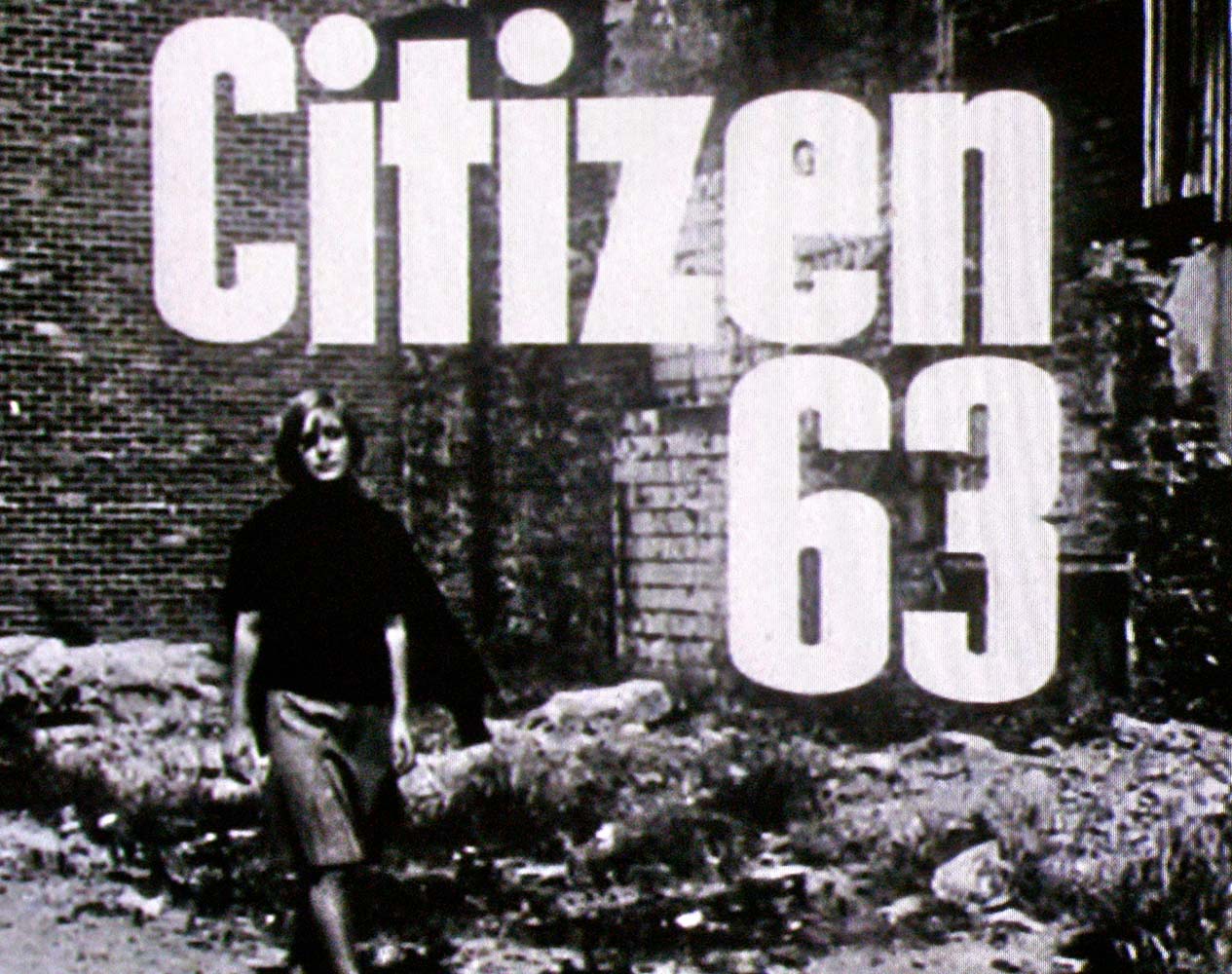
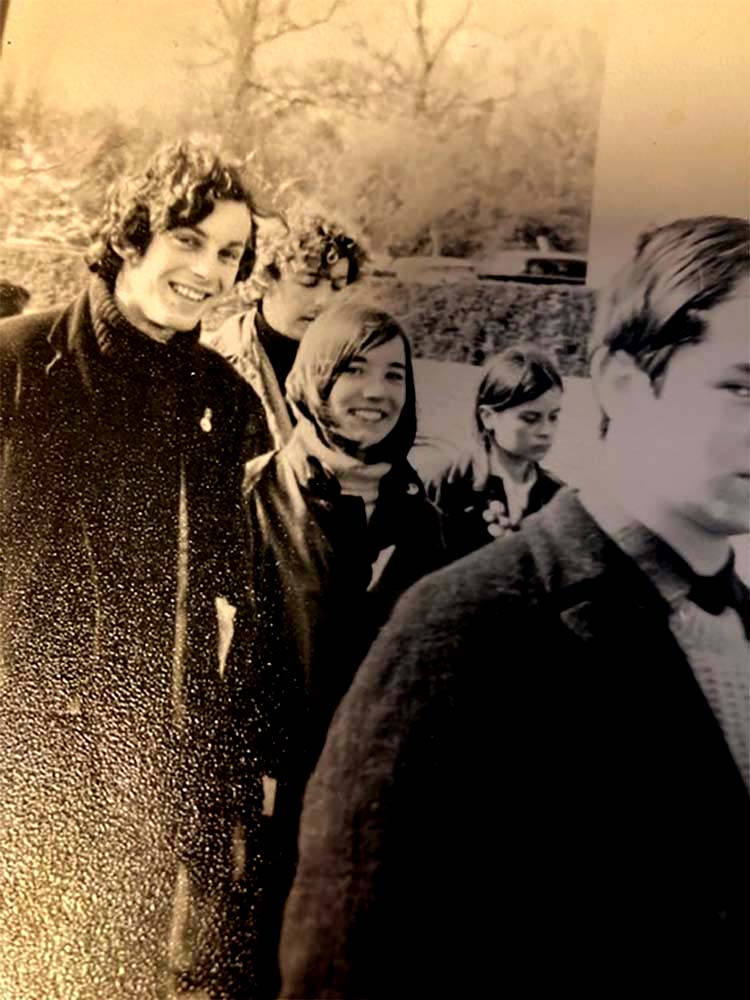
So, one of the reasons I applied to Portsmouth College of Art, was that the youngsters featured in Citizen 63 seemed quite like me and my few fellow-travellers (we called ourselves ravers, groovers and beats) on the Island - I recognised their choice of clothes, hair-styles, unconventional, exciting life-styles - in fact I identified with them very strongly - and consciously spent my leisure time in Portsmouth looking out for these Citizen 63 groovers. And eventually I discovered one of them (the CGI pioneer Chris Briscoe) at Art College with me...
The image above is of me and my girlfriend Roz Parker - on the Aldermaston March in 1963, for IW CND - led by the late brilliant protester and intellectual Peter (Pip) Tuck from Cowes. Sue Oldershaw, nee Lewis and Ray Carroll are in the background- there was quite a large contingent from the Island..
But what about computers and art? Well, at art college, we read Studio International, Architectural Design, and later, Leonardo, and were aware of the high-tech-low art being investigated by artists like Richard Hamilton and Eduardo Paolozzi - and Robert Rauschenberg in the USA - , but 'computers' then were still room-size 'mainframes'. In fact it was my love of science-fiction that began to educate me about computers - early 1950s sci-fi like Fred Pohl's The Space Merchants had a profound impact on me - and on Elon Musk I guess):
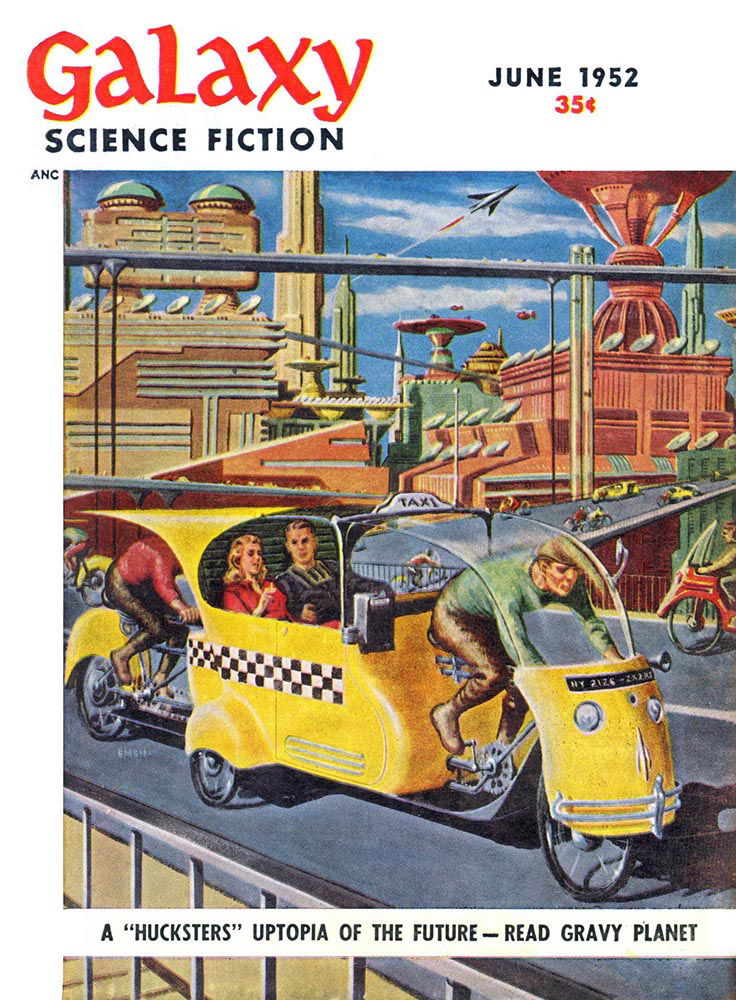
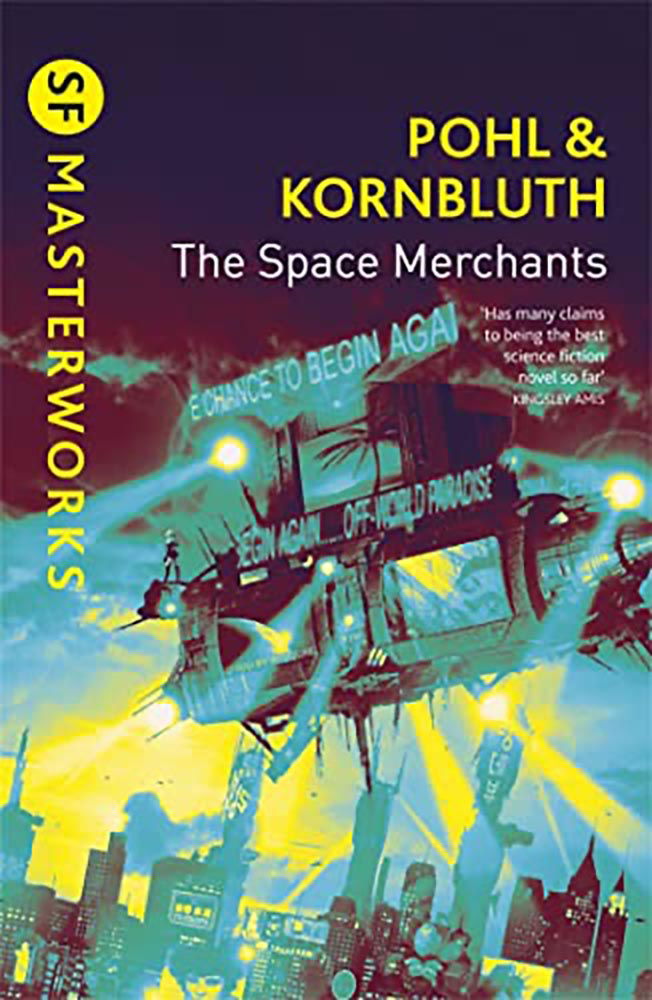
The Space Merchants aka Gravy Planet by Frederik Pohl and Cyril Kornbluth (1952) is about a future where the world is controlled by Space-Merchant Oligarchs...say no more - it tragically resembles our 2020s Present.
"In a vastly overpopulated world, businesses have taken the place of governments and now hold political power. States exist merely to ensure the survival of huge trans-national corporations. Advertising has become hugely aggressive and by far the best-paid profession. Through advertising, the public is constantly deluded into thinking that the quality of life is improved by all the products placed on the market. Some of the products contain addictive substances designed to make consumers dependent on them. However, the most basic elements of life are incredibly scarce, including water and fuel. Personal transport may be pedal powered, with rickshaw rides being considered a luxury. The planet Venus has just been visited and judged fit for human settlement, despite its inhospitable surface and climate; the colonists would have to endure a harsh climate for many generations until the planet could be terraformed." (Google AI summary)
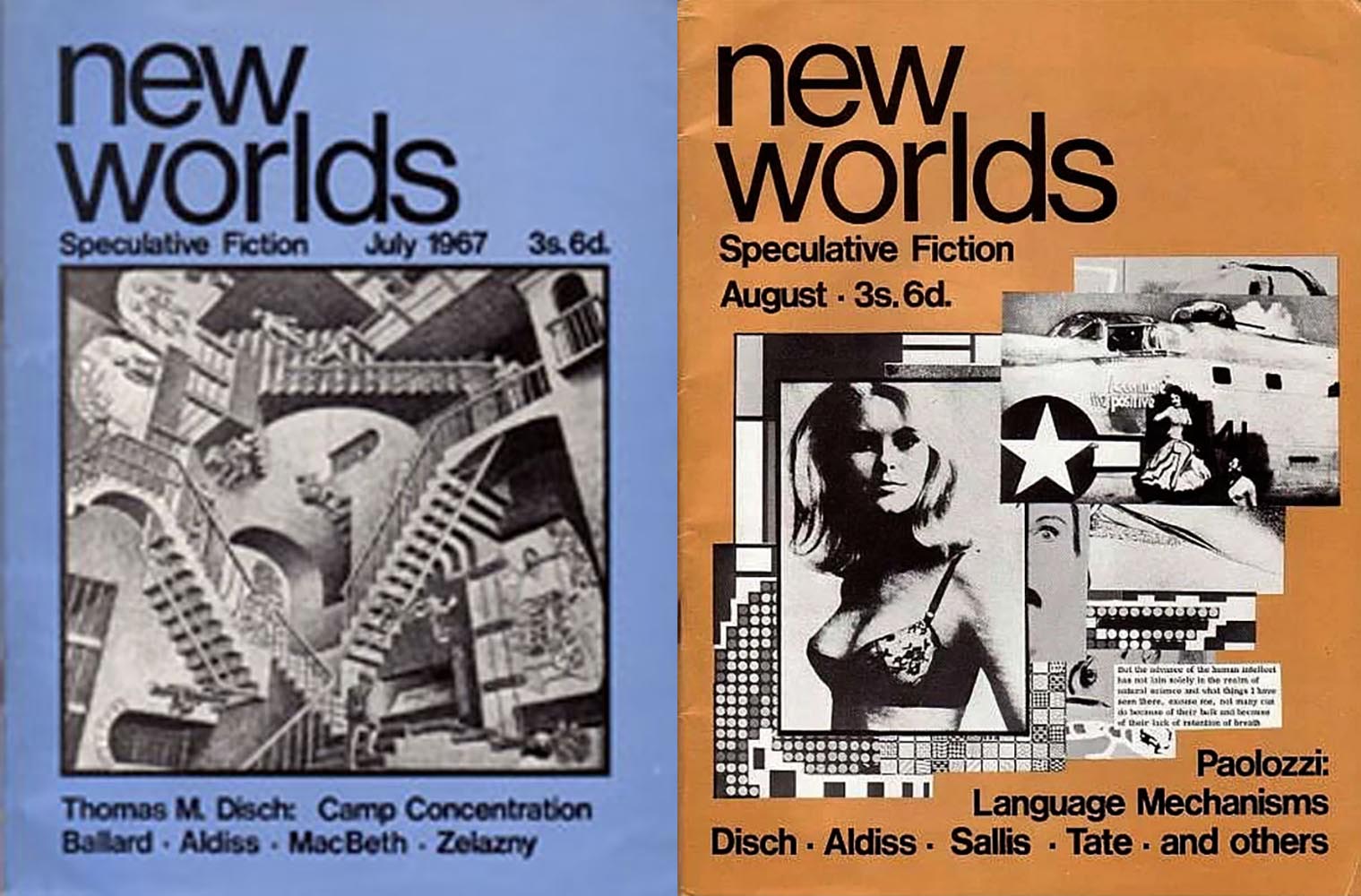
at that time Michael Moorcock, the English sci-fi author was editing New Worlds Speculative Fiction - a magazine that covered fine art, philosophy and science:
And I was reading the emerging sci-fi 'canon' - of Asimov, Ray Bradbury, Frederic Pohl, Robert Heinlein, Frank Herbert, John Brunner, Michael Moorcock, William Burroughs, JG Ballard, van Vogt, Brian Aldiss et cetera...
"Moorcock took over the editorship of New Worlds in 1964, and a few years later, he was managing a magazine that had seized the zeitgeist head-on. In this August 1967 issue, the cover features the work of Eduardo Paolozzi – the Scottish Italian sculptor and ‘co-inventor’- of Pop Art (with his contemporary Richard Hamilton). This was one of a tiny bundle of magazines that in one way illustrated and in another way formulated, the spirit of the age. These included Architectural Design (AD), Oz magazine, International Times (IT), Rolling Stone (in its original low-print-cost, newsprint-paper, offset litho form), and of course New Worlds SF. New Worlds received a small annual grant from the UK Arts Council in recognition of the fact that Moorcock was featuring the best speculative fiction, articles about modern art, philosophy, science. It was a monthly fix of what was happening in the late 1960s – in poetry, fiction, SF, art, thought." (Bob Cotton: media-art-innovation.com)

My own discovery of computers-in-art was joining a workshop run by the CGI pioneer John Vince and the architect John Lansdowne - , at Middlesex Polytechnic in the 1980s - constructing 3d animations using a time-share mini-mainframe. And then (breakthrough for me! - later the 1980s) discovering Apple Computer's Hypercard and Hypertalk - conceived and programmed by Bill Atkinson (also largely responsible for the Apple Macintosh GUI and the first bundled MacPaint bitmap-editor)
I was at the Apple Developer Conference in Islington in 1987-88 when Douglas Adams - the delightful author of The Hitch-Hikers Guide to the Galaxy was given the job of launching Hypercard - the first popular hypertext-editor - not an easy task, because most people - including me - did not know much about 'hypertext'. But Adams was brilliant - and hilarious - he told us - and illustrated it on-screen, that he decided to use Hypercard to create a database of his favourite records - and as an example, he showed us the Sgt Pepper LP - and illustrated his hypercard example of the track 'Day in the Life' "I heard the news today, oh boy - 10,000 holes in Blackburn Lancashire" - and he showed us a street-map of Blackburn - then dotted it with 10,000 'holes', then used hypercard to calculate the total volume of the holes, then showed us a 3d model of the Royal Albert Hall and showed us how many holes you could fit in the Hall, and so on: a reductio-ad-absurdam that was clever and very funny and illustrated what Hypercard could do perfectly...
Importantly, Hypercard was bundled free with the Macs sold that year, and the Apple Macintosh became the must-have tool for designers and artists...(the interface GUI was actually designed by designers, not just hacked together by computer-scientists - Learning the scripting language Hypertalk was easy, and by the end of that year, Richard Oliver, Asif Choudhary and I had published a 'hyper-magazine' we called 'High Bandwith Panning':
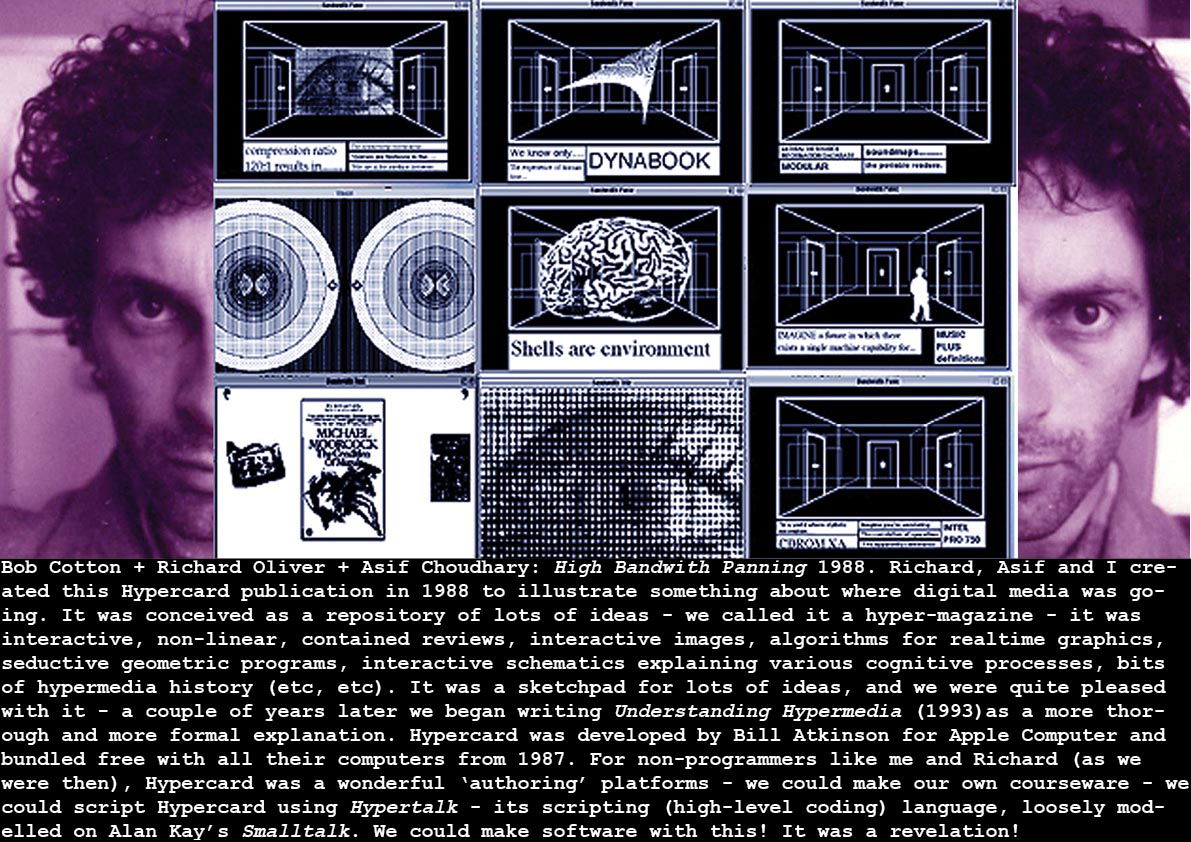
High Bandwidth Panning was a magazine developed in Hypercard that covered some of the developments in hypertext, fiction and programming that we found interesting and that illustrated some of the potential of Hypercard and New Media generally...
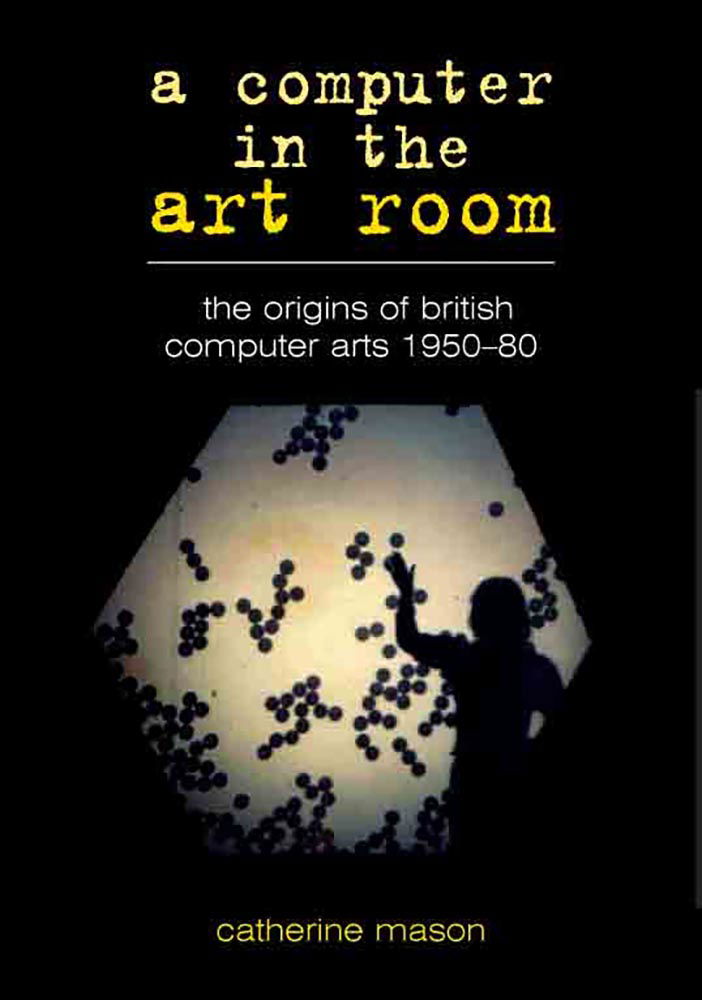
Catherine Mason's A Computer in the Art Room looks at the origins of computer art and the impact made by artists in incorporating computers into the art-school curricula between 1950-1980.
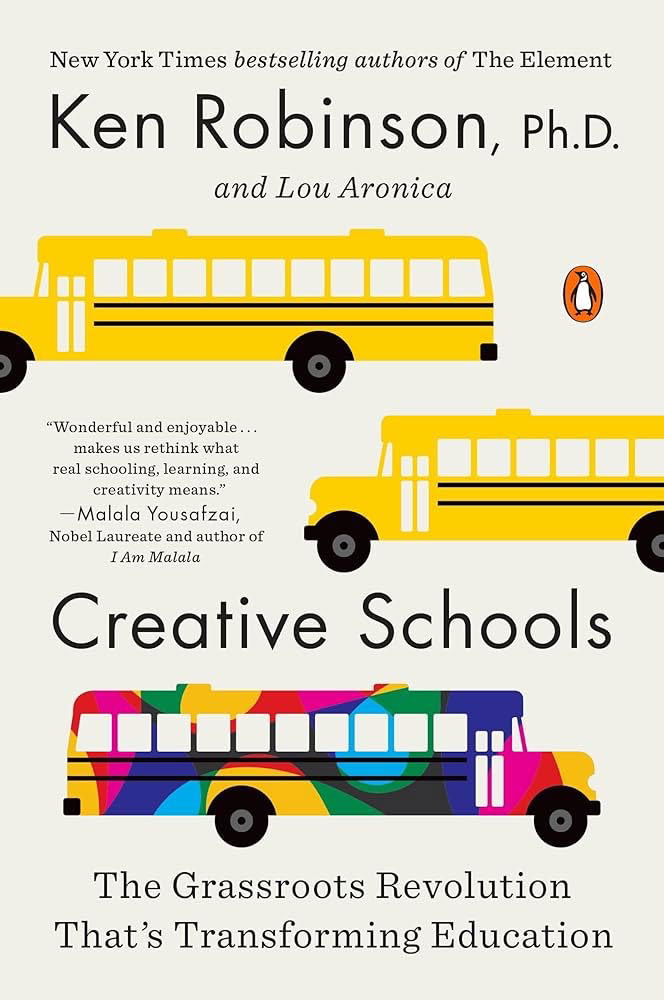
More recently, in 2015, Ken Robinson has formalised his ideas on student-centred learning ('student-centred, project-based learning') - the Learning technique with a long, successful history in art-education. As I have written elsewhere in these blogs, student centred learning emerged in the arts & crafts guilds and later in the 19th century in the Government Design Schools (what is now the Royal College of Art was one of the first of these), helping to establish this 'learning by doing' approach across most art schools of note. By a slightly different route, student-centred design became the educational paradigm of the Bauhaus in Germany and in Vkhutemas in the USSR, and this paradigm was adopted across the USA in the 1930s onwards as European designers and artists migrated West away from Nazism. Ken Robinson's book illustrates the success of the student-centred learning-by-doing approach in the US Secondary sector...
But back in the 1970s, educational reformers Ivan Illich and Everett Reimer published their great books De-Schooling Society (1970) and School is Dead (1971) arguing for John Dewey's dictum: 'Learning by Doing' and a radical change in the secondary-education system:
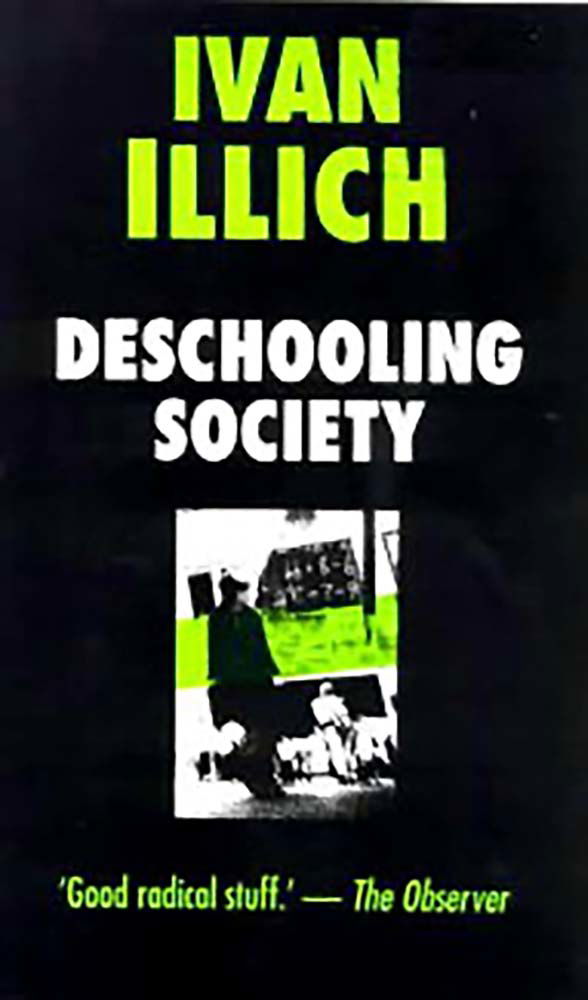
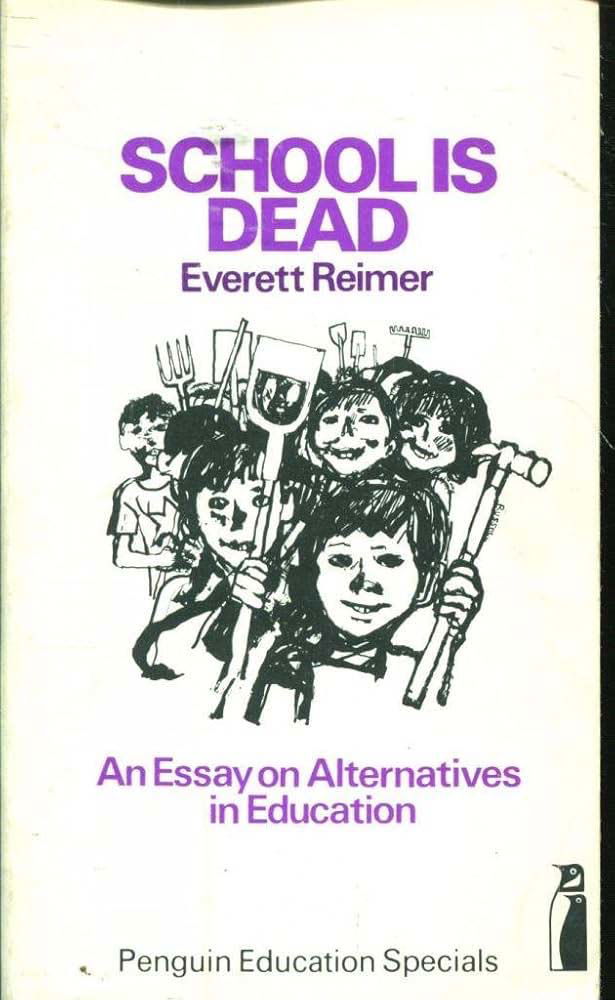
These books followed John Dewey's accent on learning-by-doing rather than conventional 'top-down' teacher-led education. Illich also proposed the idea of Peer-Learning Networks - an idea more easily realisable now (in the web age) than then:
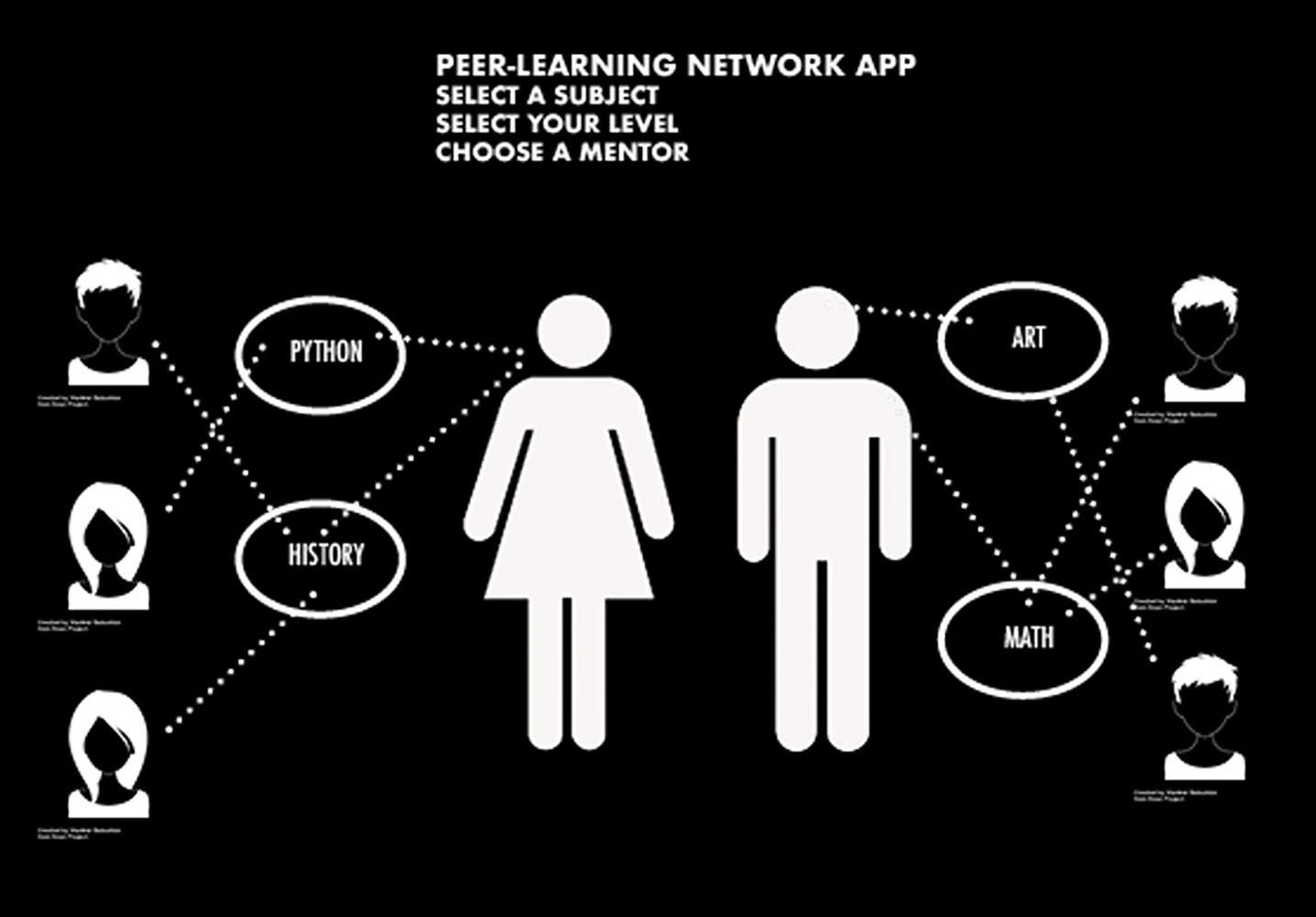
Peer-Learning Networks enable students to easily find other students at the same stage of learning in a particular subject - and if they want, for them to find teachers and/or mentors to guide them too.
More to come...
Comments